
Green Production-Utilization-Recycling Synergy
科研团队
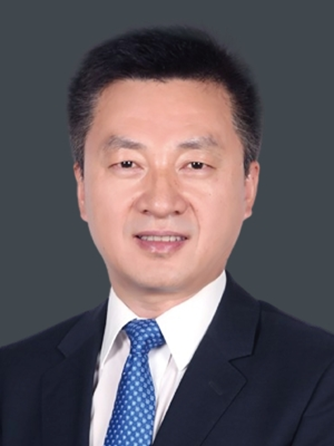
Yanglong HOU
School of Materials, Sun Yat-sen University
Position: Professor, Doctoral Supervisor
University Profile:https://materials.sysu.edu.cn/teacher/549
Professor Yanglong Hou earned his M.S. in Applied Chemistry and Ph.D. in Materials Science from Harbin Institute of Technology, followed by postdoctoral research at Peking University, University of Tokyo, and Brown University. He joined Sun Yat-sen University in 2023. His research focuses on inorganic materials chemistry, including magnetic functional materials, biomedical materials, and energy materials, with over 260 SCI publications (Nature, Nature Communications, JACS), H-index 95, and 21 patents (15 granted). His team develops dimension-controlled nanomaterials for biomedical applications and low-carbon energy solutions, including 2D magnetic heterostructures, iron-based nanocatalysts, and N-doped carbon electrocatalysts, enhancing energy conversion efficiency and supporting carbon-neutral energy technologies. His work also advances spintronic devices and low-energy nanosystems, contributing to material innovation for sustainable industrial transformation.
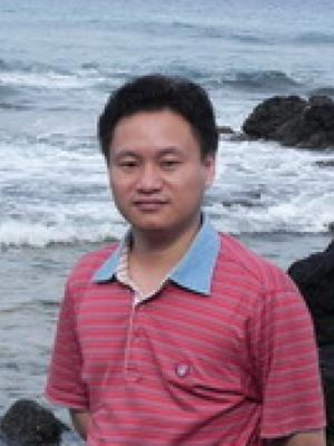
Gangfeng OUYANG
School of Chemistry, Sun Yat-sen University
Position: Professor, Doctoral Supervisor
University Profile:https://ce.sysu.edu.cn/zh-hans/teacher/806
Professor Gangfeng Ouyang earned his B.S. from Sichuan University and M.S./Ph.D. from Sun Yat-sen University. He joined Sun Yat-sen University in 1995 and was promoted to Professor in 2010. His research focuses on environmental analytical chemistry and microextraction techniques, with over 80 SCI publications (Chem. Rev., Nat. Commun., Anal. Chem.) and 3 patents. He develops solid-phase/liquid-phase microextraction methods and nanomaterial probes to enhance in-situ and live-sample environmental monitoring. These techniques reduce reagent use and energy consumption, contributing to low-carbon analytical practices and sustainable environmental management.
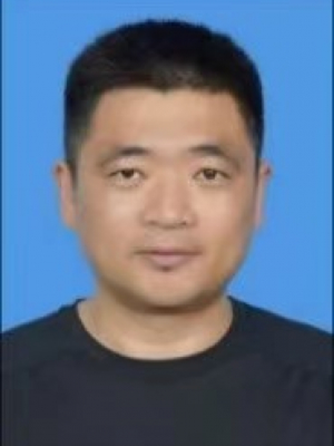
Jujun RUAN
School of Environmental Science and Engineering, Sun Yat-sen University
Position: Professor, Doctoral Supervisor
University Profile:https://sese.sysu.edu.cn/teacher/4052
Professor Jujun Ruan earned his degrees from Yangzhou University and Shanghai Jiao Tong University. He specializes in solid waste resource recovery and pollution control, with over 100 SCI publications (Environmental Science & Technology, Journal of Hazardous Materials) and 30 patents. His team develops technologies for dismantling, sorting, and recycling urban mine wastes such as e-waste, lithium batteries, and PV panels, achieving metal recovery rates over 95% and reducing carbon emissions by 60% compared to traditional methods. These low-carbon waste treatment solutions support circular economy practices, renewable energy development, and carbon-neutral urban initiatives, with demonstration projects processing over 100,000 tons of waste annually.
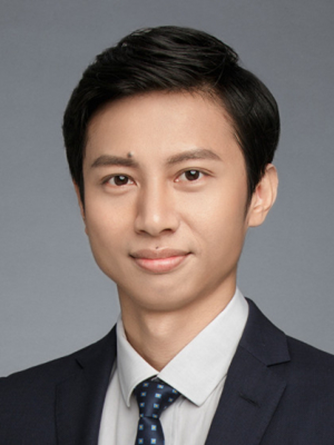
Feng JIANG
School of Environmental Science and Engineering, Sun Yat-sen University
Position: Professor, Doctoral Supervisor
University Profile:https://sese.sysu.edu.cn/teacher/5043
Professor Feng Jiang holds a B.S. in Atmospheric Science and a Ph.D. in Environmental Engineering from Sun Yat-sen University, with postdoctoral experience at Hong Kong University of Science and Technology and a visiting scholar stint at the University of Illinois. Since 2019, he has focused on water pollution control, publishing over 100 SCI papers (Nat. Commun., Environ. Sci. Technol.) and holding 30+ patents. His team develops sulfur-based autotrophic denitrification and mine wastewater treatment technologies, reducing carbon and energy use by 25–60%, and enabling low-carbon municipal and industrial wastewater solutions. These methods have been applied in large-scale demonstration projects and recognized with national and international awards.
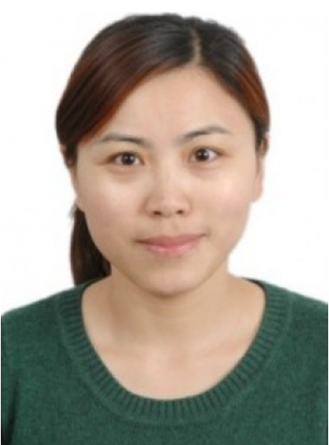
Wan YUE
School of Materials Science and Engineering, Sun Yat-sen University
Position: Professor, Doctoral Supervisor
University Profile:https://mse.sysu.edu.cn/teacher/109
Professor Wan Yue earned her M.S. and Ph.D. from the Chinese Academy of Sciences, with postdoctoral experience at the University of Würzburg and a Marie Curie Fellowship at Imperial College London. Since 2023, her research has focused on organic polymer functional materials and organic semiconductor devices for flexible electronics. She has published 60+ papers in top journals (Sci. Adv., Nat. Commun., J. Am. Chem. Soc.) and holds 20+ patents. Her team develops flexible transistors, biosensors, and organic ion-electron hybrid conductors, achieving high-sensitivity detection and reducing device energy consumption and carbon footprint by 30–50%. These innovations advance low-carbon wearable electronics and flexible energy devices, contributing to carbon-neutral technology applications.
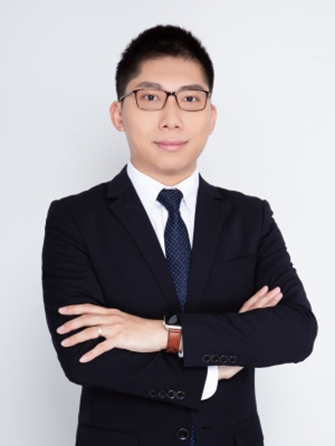
Zhenyu YANG
School of Chemistry, Sun Yat-sen University
Position: Professor, Doctoral Supervisor
University Profile:https://ce.sysu.edu.cn/zh-hans/teacher/810
Professor Zhenyu Yang earned his B.S. from Nankai University, Ph.D. in Chemistry from the University of Alberta, and completed postdoctoral research at the University of Toronto. Since 2018, he has been at Sun Yat-sen University, focusing on semiconductor quantum dots, low-dimensional perovskite optoelectronic materials, surface chemistry, and device engineering. He has published 70+ papers (Nat. Photonics, Nat. Commun., J. Am. Chem. Soc.), holds 7 patents, and his research has been cited over 9,000 times. His team develops low-temperature perovskite LEDs and solar cells, silicon-based single-atom catalysts for visible-light CO synthesis, and flexible solar cells, achieving up to 40% energy savings and reducing carbon emissions. They also advance low-carbon photovoltaic materials and lithium-ion battery anodes, enhancing device efficiency, lifetime, and sustainability. His work supports carbon-neutral technologies in solar energy, energy storage, and flexible electronics.
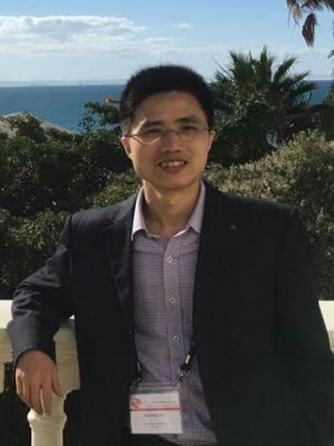
Kairong LIN
School of Civil Engineering, Sun Yat-sen University
Position: Vice Dean, Professor, Doctoral Supervisor
University Profile:https://civil.sysu.edu.cn/teacher/485
Professor Kairong Lin earned his B.S. in Hydrology and Water Resources Engineering and Ph.D. in Hydrology and Water Resources from Wuhan University, and was a visiting scholar at the University of Illinois Urbana-Champaign. Since 2007, he has been at Sun Yat-sen University, focusing on hydrological modeling, flood risk assessment, climate change impacts on water resources, and water system optimization. He has published 150+ papers (Hydrological Processes, Journal of Hydrology), holds 3 patents, and has led 30+ projects, including NSFC and national key R&D programs. His work includes distributed hydrological models and uncertainty analysis frameworks for improved flood forecasting, climate-adaptive water allocation models increasing water-use efficiency by 15%, and SWAT-based carbon-water coupling for land-use impact assessment. These innovations support low-carbon flood control, integrated water-carbon management, and sustainable regional water planning in the Guangdong-Hong Kong-Macao Greater Bay Area.
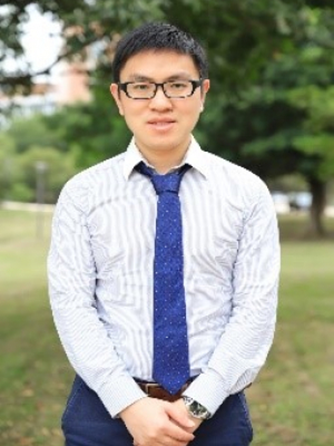
Dehua XIA
School of Environmental Science and Engineering, Sun Yat-sen University
Position: Professor, Doctoral Supervisor
University Profile:https://sese.sysu.edu.cn/teacher/4061
Professor Xia Dehua earned his B.Sc., M.Sc., and Ph.D. from Sun Yat-sen University and the Chinese University of Hong Kong. He focuses on multiphase catalytic water and air pollution treatment, including reclaimed water disinfection and odor control. He has published 60+ SCI papers, holds 10 patents, and his catalytic ozone and single-atom catalyst technologies reduce chemical use and carbon emissions in water treatment. His team also develops piezo- and solar-driven photothermal catalysis for near-zero-carbon water disinfection, with annual CO₂ reduction exceeding 1,000 tons, supporting industrial and rural applications toward carbon neutrality.
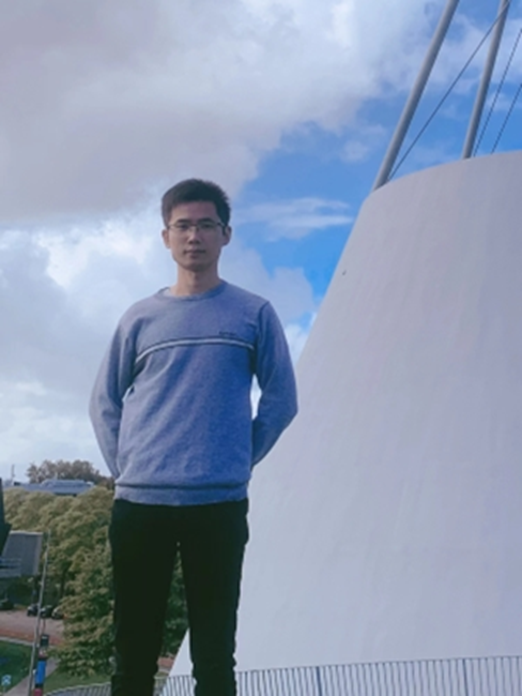
Haicheng ZHANG
School of Geography and Planning, Sun Yat-sen University
Position: Associate Professor, Doctoral Supervisor
University Profile:https://gp.sysu.edu.cn/teacher/ZhangHaicheng
Associate Professor Haicheng Zhang earned his B.Sc. in Geography from Sun Yat-sen University and Ph.D. in Global Environmental Change from Beijing Normal University, with postdoctoral research at Vrije Universiteit Brussel and the French Laboratory for Climate and Environmental Sciences. Since 2019, he has been at Sun Yat-sen University, focusing on global change and terrestrial ecosystem carbon cycling, including soil carbon dynamics, plant phenology responses, and coupled carbon-water-nutrient cycles. He has led 7 national and provincial projects, published 13 first-author papers in Nature Climate Change, Communications Earth & Environment, and Global Change Biology, and developed the CENTURY-CUE v1.0 carbon model integrated into EU carbon-cycle research frameworks. His work quantifies soil erosion carbon loss, models terrestrial-to-river-to-ocean carbon transfer, and supports ecosystem restoration to enhance regional carbon sequestration by up to 12% in alpine grasslands. His subtropical soil organic carbon monitoring techniques provide key data and methods for achieving regional carbon-neutral goals.
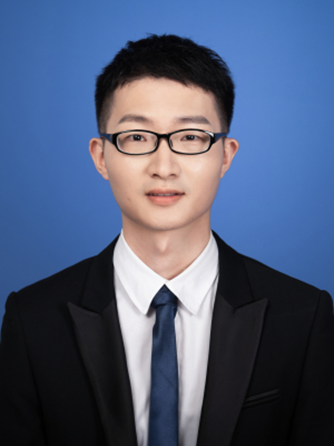
Yi LI
School of Chemical Engineering and Technology, Sun Yat-sen University
Position: Associate Professor, Master’s Supervisor
University Profile:https://cet.sysu.edu.cn/node/1134
Associate Professor Yi Li specializes in advanced membrane materials for water desalination and organic solvent separation. She has published 13 high-impact papers as first or corresponding author and contributed to multiple national and international projects. Her nanocomposite and solvent-resistant membranes achieve >95% separation efficiency and >90% solvent recovery while reducing energy use by 60% compared with traditional distillation. In carbon-neutral practice, her membranes enable heavy metal and organic solute recovery from industrial wastewater, cutting CO₂ emissions by 30%, and MoS₂-modified RO membranes lower energy consumption by 15%, achieving annual carbon reduction over 1,000 tons in VOC recovery. Her work on green membrane technologies supports sustainable chemical, energy, and pharmaceutical applications aligned with carbon neutrality.
