
Water-Energy-Carbon-Pollution Synergy
Team
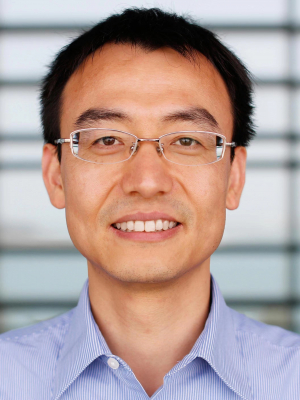
Peng WANG
School of Environmental Science and Engineering, Sun Yat-sen University
Position: Professor, Doctoral Supervisor
Roles:
- Deputy Director, Academic Committee of the Faculty of Engineering
- Yixian Scholar Distinguished Talent
- Founding Director, Institute of Carbon Neutrality and Green Development
- Co-founding Chair, International Association for Water Harvesting from Air (IAWHA)
- Executive Editor, Environmental Science & Technology (ES&T)
University Profile:https://sese.sysu.edu.cn/teacher/6350
Professor Peng Wang holds degrees from Nanjing University, Sun Yat-sen University, and the University of California, Santa Barbara, with postdoctoral experience at HKUST and UCSB. He was a founding faculty member at KAUST and joined Sun Yat-sen University full-time in 2023. His research focuses on water–energy–environment nexus and low-carbon technologies for carbon neutrality, including renewable energy-driven clean water production, PV cooling, and integrated PV–water–agriculture systems. He has published over 130 papers in leading journals, authored three books, and received major international awards such as the 2023 UAE International Water Prize and the 2020 Prince Sultan Bin Abdulaziz International Prize for Water. His innovations, recognized by Science and Nature Sustainability and showcased at COP28, are advancing global low-carbon solutions and have been applied in multiple regions worldwide.
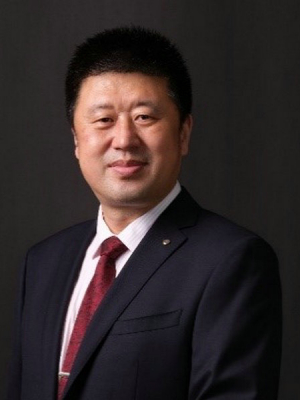
Lianpeng SUN
School of Environmental Science and Engineering, Sun Yat-sen University
Position: Professor, Doctoral Supervisor
University Profile:https://sese.sysu.edu.cn/teacher/4041
Professor Lianpeng Sun earned his Ph.D. in Municipal Engineering from Harbin Institute of Technology, with postdoctoral research at Tongji University and visiting research at Virginia Tech. He is a registered Environmental Engineer and a leading expert in carbon-neutral water treatment. He has led over 40 national and international projects, published more than 50 SCI papers in top journals such as Chemical Engineering Journal and Bioresource Technology, and holds 35 patents. He developed the “MOSA” process, which reduces sludge by 30–50% and cuts carbon emissions by over 40%, a technology certified by the EU and applied in Belt and Road countries. Recognized by Water Research as a disruptive carbon-neutral solution, his work has earned multiple provincial and municipal science awards. He continues to advance water treatment innovation under China’s dual-carbon goals, collaborating with leading global institutions such as MIT and Imperial College London.
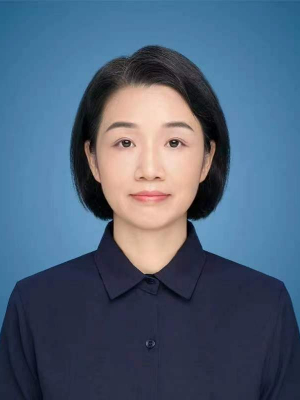
Jingyun FANG
School of Environmental Science and Engineering, Sun Yat-sen University
Position: Professor, Doctoral Supervisor
University Profile:https://sese.sysu.edu.cn/teacher/4031
Professor Jingyun Fang received her B.S., M.S., and Ph.D. degrees in Municipal and Environmental Engineering from Harbin Institute of Technology, followed by postdoctoral research at HKUST. She joined Sun Yat-sen University in 2013 and has since served as an Associate Professor under the “Hundred Talents Program” and later as a Professor. Her research focuses on water pollution control, halogen radical chemistry, advanced oxidation/disinfection, and interfacial processes in water purification. She has published over 100 SCI papers in leading journals such as Angewandte Chemie International Edition and Environmental Science & Technology. Honors include the National Science Fund for Distinguished Young Scholars (2023), the Excellent Young Scientists Fund (2019), three-time recognition as a Highly Cited Researcher (2020, 2022, 2024), the James J. Morgan ES&T Early Career Award (2020), and the IWA Innovation Award (Mercury Prize, Silver). Her team develops low-carbon water treatment and groundwater remediation technologies, such as advanced oxidation (UV/chlorine, photocatalysis) and zero-valent iron activated persulfate, reducing emissions by over 60% and enabling scalable applications that support carbon neutrality and sustainable water reuse.
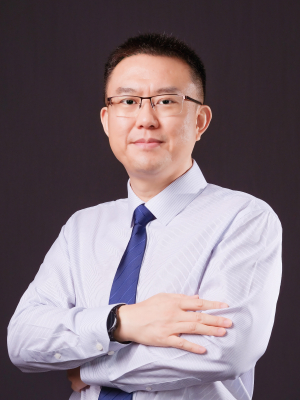
Lv HUI
School of Environmental Science and Engineering, Sun Yat-sen University
Position: Assistant Dean, Professor, Doctoral Supervisor
University Profile:https://sese.sysu.edu.cn/teacher/4037
Professor Hui Lü holds a B.S. and M.S. in Municipal/Water Supply Engineering from Harbin Institute of Technology and a Ph.D. in Environmental Engineering from HKUST, where she also completed postdoctoral research. She joined Sun Yat-sen University in 2012 through the “Hundred Talents Program” and is now Professor, Doctoral Supervisor, and Assistant Dean. Her research focuses on wastewater treatment, industrial effluent management, and emerging contaminant control, with emphasis on sulfur-cycle-based biotechnologies. She has published over 80 SCI papers in leading journals such as Water Research and Chemical Engineering Journal, and holds more than 20 international patents. She received honors, including the IWA Innovation Award (Mercury Prize, Gold, 2020), the Excellent Young Scientists Fund, and the Guangdong Teaching Achievement Grand Prize. Her team pioneered the SANI® process, reducing sludge production by over 60% and greenhouse gas emissions by 40%, recognized by IWA as a global innovation case. These technologies have cut energy use by 30% in industrial wastewater treatment while improving nutrient removal, driving the shift from “end-of-pipe treatment” to “resource recovery and low-carbon solutions.”。
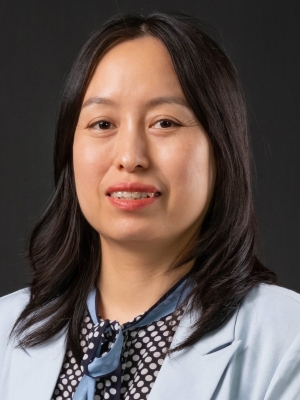
Xin YANG
School of Environmental Science and Engineering, Sun Yat-sen University
Position: Professor, Doctoral Supervisor
University Profile:https://sese.sysu.edu.cn/teacher/4021
Professor Xin Yang received her B.S. in Environmental Science from Nankai University and her M.S. and Ph.D. in Civil and Environmental Engineering from HKUST, followed by postdoctoral research at the University of North Carolina. She joined Sun Yat-sen University in 2010 through the “Hundred Talents Program” and is now Professor and Doctoral Supervisor. Her research focuses on water pollution chemistry and drinking water safety, with over 100 SCI papers published in top journals. She serves as Associate Editor of the Journal of Environmental Chemical Engineering and on the editorial boards of Environmental Science & Technology and Journal of Hazardous Materials. Recognized as an Elsevier “Highly Cited Chinese Researcher” and among the global top 2% of scientists, she has received the Fok Ying-Tong Education Foundation Young Scientist Award and the Guangdong Natural Science Award (First Rank, Second Prize). Her team developed advanced UV/chlorine and photocatalytic oxidation technologies, reducing disinfection by-products by over 30%, and pioneered low-carbon oxidation systems that cut energy use by 25%. These technologies have achieved large-scale carbon reduction in drinking water treatment in the Pearl River Delta, providing scientific and practical pathways toward carbon neutrality in water treatment.
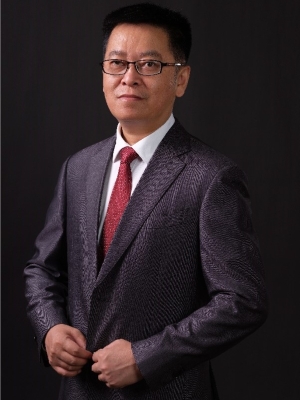
Yetao TANG
School of Environmental Science and Engineering, Sun Yat-sen University
Position: Vice Dean, Professor, Doctoral Supervisor
University Profile:https://sese.sysu.edu.cn/teacher/4019
Professor Yetao Tang holds a B.S. in Environmental Chemistry from Nanjing University and M.S./Ph.D. degrees in Environmental Science from Sun Yat-sen University, where he has served since 2000 and was promoted to Professor in 2017. He specializes in ecological remediation of heavy metal pollution in mining and agricultural soils, establishing a full-chain system from biogeochemical mechanisms to functional materials and engineering applications. He has published over 200 papers, holds more than 30 patents, and has received national awards, including the State Science and Technology Progress Award (Second Class). His team developed rare-earth mine vegetation reconstruction technologies that enhance ecosystem carbon sinks and in-situ farmland stabilization methods that cut remediation carbon emissions by over 40%. As PI of major national projects, he advanced plant–microbe remediation technologies, reducing site carbon footprints by 35%, with over 500 hectares of successful field demonstrations. These innovations, recognized with the China Excellent Patent Award, provide scalable low-carbon solutions for soil remediation and contribute to sustainable development in the Greater Bay Area.
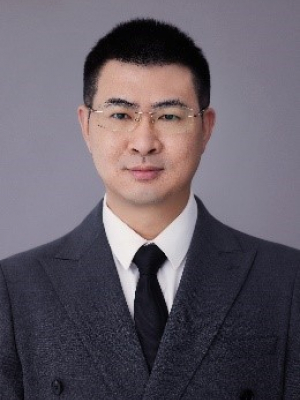
Wenbin WANG
School of Environmental Science and Engineering, Sun Yat-sen University
Position: Associate Professor, Doctoral Supervisor
University Profile:https://sese.sysu.edu.cn/teacher/6228
Dr. Wenbin Wang earned his B.S. and M.S. in Chemical Engineering from Northwestern Polytechnical University and a Ph.D. in Environmental Science and Engineering from KAUST (2023), where he later worked as a Postdoc and Research Consultant. He joined Sun Yat-sen University in 2023. His research focuses on low-carbon technologies at the water–energy nexus, including solar-driven seawater desalination, wastewater treatment, and resource recovery. He has published in Nature Communications, Joule, and Advanced Materials, with work featured as cover articles and protected by international patents. His team developed integrated PV cooling–desalination systems, achieving zero liquid discharge with 50% lower energy use, advanced solar-driven membrane distillation for off-grid water supply, and resource recovery methods for carbon-neutral wastewater treatment. His research supports global water–energy sustainability and the “dual carbon” goals.
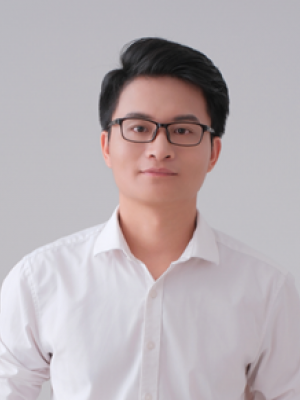
Liang ZHANG
School of Environmental Science and Engineering, Sun Yat-sen University
Position: Associate Professor, Doctoral Supervisor
University Profile:https://sese.sysu.edu.cn/teacher/6215
Dr. Liang Zhang earned his B.S. in Environmental Engineering from South China Normal University, M.S. from Sun Yat-sen University, and Ph.D. in Biosciences from Aarhus University, followed by postdoctoral research at NTU’s Environmental & Water Research Institute (2019–2022). He joined Sun Yat-sen University in 2022, focusing on low-carbon biological wastewater treatment and resource recovery. His work on sulfur-driven carbon, nitrogen, and heavy metal biotransformations has led to over 50 publications, including in Environmental Science & Technology and Water Research, and key technologies such as autotrophic sulfur-based denitrification and iron-enhanced anammox, which reduce carbon and energy use by 25–60%. His team’s sulfur–iron synergistic biotransformation systems have been applied in industrial wastewater treatment in the Pearl River Delta, promoting simultaneous carbon reduction, resource recovery, and wastewater purification, while dynamic sewer modeling supports carbon-neutral urban wastewater management.

Jianbang XIANG
School of Public Health
Position: Associate Professor, Doctoral Supervisor
University Profile:https://phs.sysu.edu.cn/zh-hans/teacher/468
Dr. Jianbang Xiang is an Associate Professor at the School of Public Health (Shenzhen), Sun Yat-sen University, a national-level young talent (overseas), and a “Yixian Scholar.” He earned his B.S. from Huazhong University of Science and Technology and Ph.D. from Tsinghua University, with postdoctoral training at the University of Washington and visiting research at Duke University. His research focuses on environmental health, precision exposure, exposomics, and personalized health risk management. He has published 37 SCI papers in top journals, including The Lancet, JAMA Internal Medicine, Environmental Science & Technology, and Environment International, holds 2 patents, and serves on editorial boards and professional committees in environmental epidemiology and indoor health. His work integrates multidisciplinary approaches to link environmental exposures with human health.
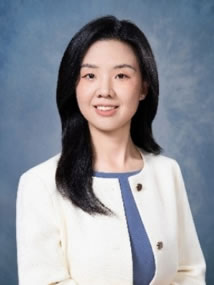
Bei LIU
School of Environmental Science and Engineering, Sun Yat-sen University
Position: Associate Professor, Doctoral Supervisor
University Profile:https://sese.sysu.edu.cn/teacher/6890
Dr. Bei Liu earned her B.S. in Environmental Engineering from Chang’an University and Ph.D. from Beijing Normal University (joint training at University of Wisconsin–Madison). She previously served as Lecturer at Shaanxi University of Science and Technology and Postdoc/Assistant Professor at Southern University of Science and Technology, joining Sun Yat-sen University in March 2025. Her research focuses on the environmental behavior of nanomaterials and interface processes, with over 20 papers in Environmental Science & Technology, Applied Catalysis B, and Chemical Engineering Journal. She develops light-driven nanomaterials to enhance plant photosynthesis and stress resistance, selective recovery of precious metals, and low-energy pollutant removal, contributing to carbon-neutral water and agricultural systems. Her work provides scientific and technological support for low-carbon nanotechnology applications and carbon footprint reduction in agriculture and water treatment.
