
Multi-Scale Carbon Neutrality Management
科研团队
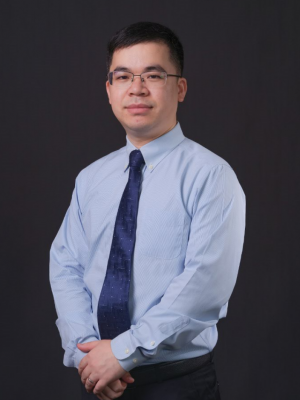
Shaoqing CHEN
School of Environmental Science and Engineering, Sun Yat-sen University
Position: Professor, Doctoral Supervisor
University Profile:https://sese.sysu.edu.cn/teacher/4029
Professor Shaoqing Chen focuses on urban energy efficiency, carbon reduction, and multi-resource optimization from a socio-economic metabolism perspective. He has published over 70 papers in journals including Nature Water, Nature Communications, and Environmental Science & Technology, with more than 3,700 citations, and leads over 10 major national projects. His urban energy–water–carbon models quantify resource coupling in the Guangdong-Hong Kong-Macao Greater Bay Area, proposing demand-side carbon reduction strategies that lower regional carbon intensity by 18%. He developed intercity carbon flow networks, revealing the decoupling potential of wastewater-related emissions across 300 Chinese cities, informing national carbon peak pilot policies. In carbon-neutral practice, his work on coupled water-energy metabolism increased water use efficiency by 12% and reduced energy consumption by 9%, while regional carbon peaking pathways in the Heyuan City project achieved a 25% emission reduction by 2030. His team’s “Urban Metabolism Dynamic Management System” has been applied in Guangzhou and Shenzhen, supporting resource circulation and carbon neutrality in urban planning.
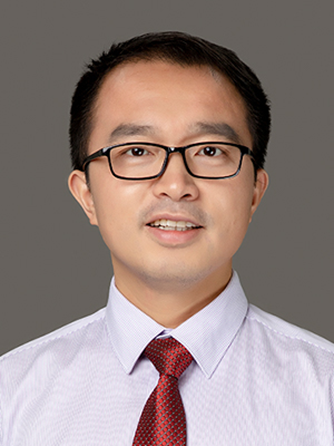
Yan ZENG
Lingnan College Sun Yat-sen University
Position: Professor, Doctoral Supervisor
University Profile:https://lingnan.sysu.edu.cn/faculty/ZengYan
Professor Yan Zeng specializes in digital inclusive finance, digital economy, financial engineering, and risk management, focusing on how digital finance empowers the real economy. He has published over 80 papers in journals, including Journal of Economic Dynamics and Control and Insurance: Mathematics and Economics, authored 7 monographs, and led 16 national and provincial projects. His digital finance risk models inform Guangdong financial supervision policies, and his green insurance portfolio models optimize climate-risk investments, increasing green investment efficiency by 18% and reducing high-carbon asset allocation by 25%. In carbon-neutral practice, his projects apply blockchain to track supply chain carbon footprints, supporting low-carbon manufacturing with annual reductions exceeding 50,000 tons CO₂, and enabling digital insurance mechanisms for agricultural carbon credits, covering over 100,000 farmers and generating annual carbon revenue above ¥20 million. His “Digital Economy and Low-Carbon Development” international forum provides policy insights cited by the World Economic Forum, and his team’s carbon-finance risk management system is demonstrated at the Guangzhou Emissions Trading Center.
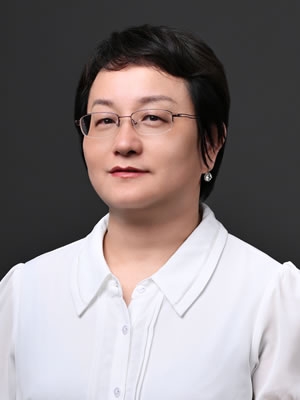
Yonghong LIU
School of Intelligent Systems Engineering, Sun Yat-sen University
Position: Dean's Assistant, Professor, Doctoral Supervisor
University Profile:https://ise.sysu.edu.cn/teacher/LiuYonghong
Professor Yonghong Liu has been at the university since 2007 and became a full professor in 2023. She focuses on intelligent monitoring of traffic-related pollution, computational modeling of urban air–traffic systems, and transportation environmental big data. She has led 30 projects in the past five years, publishing 30+ papers (Nature Communications, Lancet Infectious Diseases, Environmental Pollution, 20+ as first/corresponding author) and holds 3 patents and 3 software copyrights. She developed a big-data urban traffic emissions platform achieving 92% accuracy, applied in Guangdong’s low-carbon traffic pilot, and her Foshan low-carbon traffic system reduced vehicle CO₂ by 15% and NOₓ by 22%. Her traffic–air–health coupling model and dynamic vehicle emissions analysis system support regional carbon-peak planning, while her work on vehicle–road coordinated logistics projects cuts ~30,000 tons CO₂/year, providing key technologies for green transportation in the Greater Bay Area.
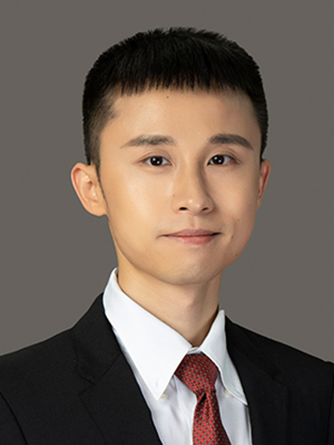
Yilin ZHANG
Lingnan College Sun Yat-sen University
Position: Professor, Doctoral Supervisor
University Profile:https://lingnan.sysu.edu.cn/faculty/ZhangYilin
Professor Yilin Zhang specializes in technology finance, carbon finance, and new-structure financial systems. He has published 40+ papers (Economic Research, Management World), received 20+ provincial and national awards, and led 15 major research projects. He proposed the “New-Structure Finance” theory on the synergy of industrial and financial structures and developed carbon market models that improved trading efficiency by 30%, applied in Guangdong’s pilot carbon market. In carbon-neutral practice, his carbon-finance risk control framework reduces regional carbon leakage risk by 40%, and his blockchain-enabled supply chain finance platform cuts SMEs’ green financing costs by 18%, supporting over 5 billion RMB in low-carbon projects annually. His team’s carbon data quality assessment model is deployed across key Greater Bay Area enterprises, enhancing emissions accounting accuracy to 92%, providing critical financial technology for achieving China’s dual-carbon goals.
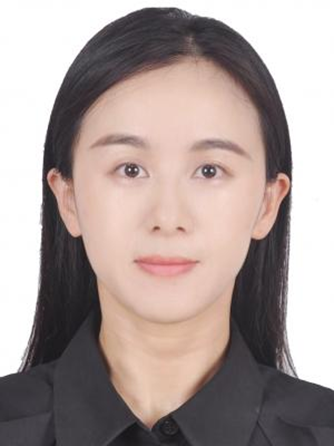
Jingwen ZHANG
School of Civil Engineering, Sun Yat-sen University
Position: Professor, Doctoral Supervisor
University Profile:https://civil.sysu.edu.cn/teacher/1525
Professor Jingwen Zhang specializes in adaptive water resource management under changing environments. She has published 20+ SCI papers (Nature Communications, Water Resources Research), holds 5 patents, and develops models linking crop water demand with soil and atmospheric supply. Her water control models improve reservoir scheduling robustness by 20% and reduce water wastage by 5% in the upper Yangtze cascade. In carbon-neutral practice, her data–model integrated irrigation optimization increases water-use efficiency 15–20%, saving over 10 million m³ annually and cutting agricultural carbon emissions 8–12%; her water–carbon cycle simulations enhance regional farmland carbon sequestration by 10%. AI-based multi-objective reservoir scheduling reduces conventional dispatch carbon emissions by 18%, supporting sustainable water management and carbon-neutral targets in the Greater Bay Area.
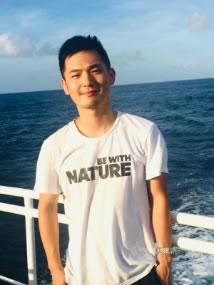
Cheng WANG
School of Environmental Science and Engineering, Sun Yat-sen University
Position: Professor, Doctoral Supervisor
University Profile:https://sese.sysu.edu.cn/teacher/5710
Professor Cheng Wang specializes in coastal carbon sequestration via microbial regulation. He has published 30+ papers (Trends in Microbiology, ISME Journal, Microbiome), holds 6 patents, and leads multiple national and provincial projects. He uncovered novel microbial pathways for methane production in mangroves and demonstrated that nitrate assimilation contributes over 30% of estuarine particulate nitrogen transformation. His functional microbial technologies reduce methane emissions from compost by 40% and increase nitrogen retention by 25%, cutting CO₂-equivalent emissions by over 20,000 tons annually. In carbon-neutral practice, his mangrove microbiome optimization increases soil carbon sequestration rates by 18%, with pilot projects in the Greater Bay Area adding over 1,000 tons of annual carbon sinks. Microbe–GHG coupled models quantify CH₄ and N₂O emissions, informing strategies that reduce regional net GHG emissions by 22%, supporting coastal ecosystem protection and China’s “blue carbon” initiatives.。
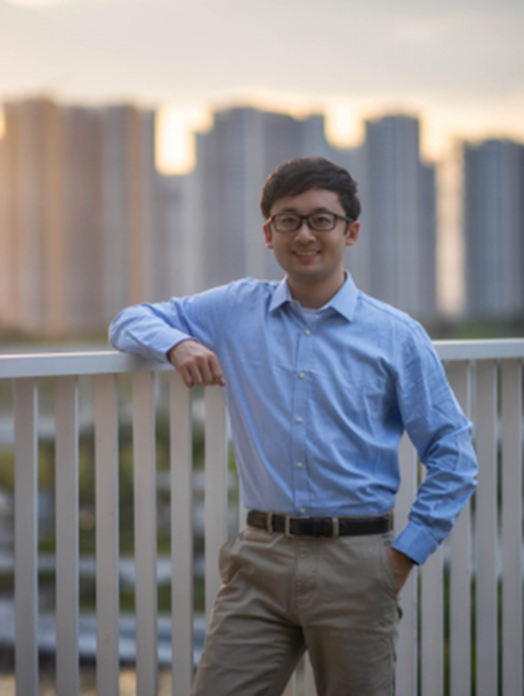
Hongyu GUO
School of Environmental Science and Engineering, Sun Yat-sen University
Position: Associate Professor, Doctoral Supervisor
University Profile:https://sese.sysu.edu.cn/teacher/6222
Associate Professor Hongyu Guo joined Sun Yat-sen University in 2023. He studies PM2.5 formation, physicochemical properties, and environmental impacts, focusing on particle acidity, water content, and atmospheric chemistry. He has published 56 SCI papers (Atmos. Chem. Phys., Sci. Rep., Nature Geoscience) and co-authored 40+ additional studies. He developed aerosol instrumentation comparison methods, improving PM2.5 component monitoring accuracy to over 90%, now adopted by the US ATom network. His research shows ammonia reduction can lower nitrate particle concentrations by 35%-50%, guiding winter PM2.5 mitigation in northern China. In carbon-neutral applications, his biomass combustion secondary particle models quantify PM2.5 and GHG contributions, with optimized combustion reducing carbonaceous aerosol formation by 20%-25%, applied in Greater Bay Area biomass projects with annual CO₂-equivalent reductions exceeding 10,000 tons. His aerosol acidity–toxicity studies support integrating PM2.5 health risk indicators into carbon-based pollution monitoring, and his online particle pH monitoring system is deployed across the Greater Bay Area, providing precise technical support for coordinated air quality management and carbon neutrality.。
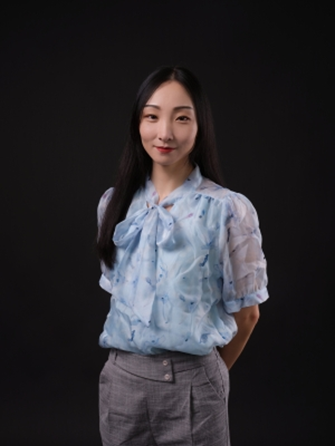
Yafei Wang
School of Environmental Science and Engineering, Sun Yat-sen University
Position: Associate Professor, Doctoral Supervisor
University Profile:https://sese.sysu.edu.cn/teacher/4141
Associate Professor Yafei Wang focuses on blue-green infrastructure (BGI) for urban environmental improvement, developing a framework of “mechanism analysis – spatial optimization – contribution assessment.” She leads 10+ projects, including NSFC and international collaborations, and has published 40+ papers (Environ. Sci. Technol., J. Cleaner Prod.) with 30+ as first/corresponding author. Her work quantifies BGI impacts on urban microclimates, e.g., optimized BGI in Guangzhou reduces summer high-temperature duration by 23% and building energy use by 15%. In carbon-neutral applications, she developed a lifecycle carbon accounting model that shows permeable BGI surfaces offset 40% more carbon than conventional pavements. These technologies have been piloted in Foshan and Shenzhen, with annual sequestration exceeding 1,000 tons. Her research on optimizing urban green space layout projects a 12% increase in carbon sink capacity for the Pearl River Delta by 2030. She also established an ecosystem service–human well-being model to support urban planning, and her urban microclimate simulation platform has been applied in 10+ communities across the Greater Bay Area, advancing sustainable, carbon-neutral urban development.。
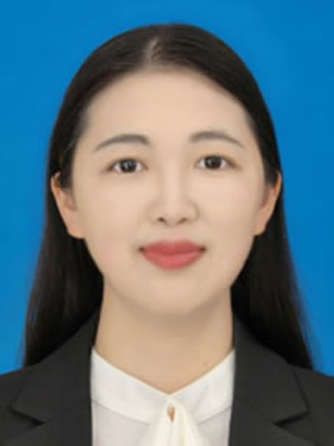
Yuhan LIANG
School of Environmental Science and Engineering, Sun Yat-sen University
Position: Associate Professor, Doctoral Supervisor
University Profile:https://sese.sysu.edu.cn/teacher/6555
Associate Professor Yuhan Liang holds a PhD in Environmental Science (Beijing Normal University) and previously worked at the Chinese Research Academy of Environmental Sciences and Wuhan Environmental Protection Institute. She joined Sun Yat-sen University in 2024 after postdoctoral research at Guangdong University of Technology. Her research focuses on cross-regional food waste accounting and its impacts on energy, water, and carbon. She has published 20+ papers (Environ. Sci. Technol., Water Research), with 11 as first/corresponding author. In carbon-neutral applications, she quantifies energy use, water consumption, and carbon emissions embedded in food waste across global value chains, showing pollution increases virtual water flows by 20%. She contributed to Pearl River Delta projects by proposing food–energy–water system optimizations that improve regional carbon reduction efficiency by 15%, and assessed lifecycle GHG emissions of lithium batteries to support low-carbon transition in the new energy sector, providing key data and methods for integrated energy–water–carbon management under China’s “dual-carbon” goals.
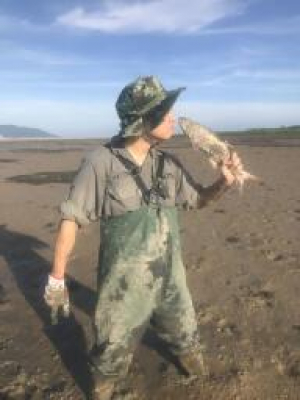
Yisheng PENG
School of Environmental Science and Engineering, Sun Yat-sen University
Position: Associate Professor, Doctoral Supervisor
University Profile:https://sese.sysu.edu.cn/teacher/4050
Associate Professor Yisheng Peng holds a PhD in Environmental Science from Sun Yat-sen University and previously completed postdoctoral research there. He joined the faculty in 2012 and conducted research at Griffith University in 2015. His work focuses on mangrove invasive species impacts, coupled with C–N cycling, and ecological restoration. He has published 40+ papers (Ecosystem Health and Sustainability, Limnology and Oceanography), with 25 as first/corresponding author, and authored the monograph South China Sea Wetlands. He revealed that native mangrove shrubs sequester 30% more carbon than fast-growing exotics under high nitrogen input and developed a 3D mangrove restoration model that increases carbon storage by 45%, applied in 200+ ha demonstration projects in the Pearl River Delta. In carbon-neutral applications, he leads projects integrating microbial–plant–hydrology regulation, reducing CH₄ emissions by 28% while enhancing carbon sequestration; these techniques support Guangdong’s blue carbon initiatives. He also applies machine learning to predict mangrove adaptation to sea-level rise, informing coastal carbon management and enabling blue carbon trading pilot programs.
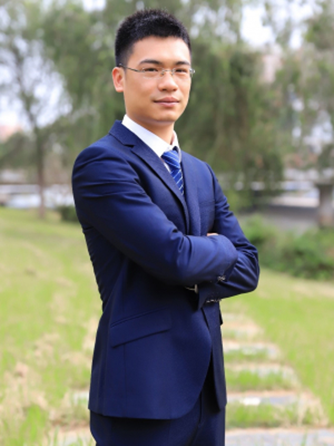
Jianping CAO
School of Environmental Science and Engineering, Sun Yat-sen University
Position: Associate Professor, Doctoral Supervisor
University Profile:https://sese.sysu.edu.cn/teacher/4716
Associate Professor Jianping Cao holds a PhD in Building Technology Science from Tsinghua University and a bachelor’s in Thermal and Power Engineering from USTC. He joined Sun Yat-sen University in 2018 after postdoctoral research at Virginia Tech. His research focuses on indoor air quality, pollutant transport, monitoring, and control. He has published 30+ SCI papers (19 as first/corresponding author) and contributed to six chapters in the Handbook of Indoor Air Quality, with three authorized patents. He developed an SPME sampling device and a dynamic testing method, improving SVOC measurement accuracy to 95%. Additionally, TiO₂-based photocatalysts treated with ozone were enhanced, resulting in a 40% increase in formaldehyde degradation. In carbon-neutral applications, his indoor VOC emission models optimize building materials to reduce emissions by 25%, applied in 10+ projects in the Greater Bay Area, and low-energy purification systems integrating ventilation and catalysis cut building energy use by 18%. His international research on SVOC skin exposure informed WHO indoor health guidelines, and his smart indoor air quality monitoring system is deployed in campuses and hospitals, supporting carbon-neutral, healthy indoor environments.
